
Updated August 3, 2026. This commercial planning guide is not legal, tax, payment, or financing advice. Requirements vary by product, location, program, and jurisdiction.
Published transaction economics: ID + face verification is $1.00 per attempted verification. Fingerprint verification is $0.50 per successful match, with no fee on failed fingerprint scans. Card processing is provided by Lifted Payments at 3.99%; a separate payments application and approval are required before go-live.
See the complete operation.
Inspect every demo page, then request delivery scope and financing options for your route.
Define the venue and operator first
Start with the exact location, the legal entity operating the machine, who controls customer access, and what staff can observe. A machine inside an existing adult-retail store presents different questions from one in a hospitality venue or common area.
Document hours, supervision, traffic, security cameras, lighting, customer clearance, restocking access, network conditions, and the process for removing the machine if the placement changes.
Verify the product and payment program
Vape products can be subject to product, tax, licensing, marketing, and payment restrictions. List every product class planned for the machine and review it against current federal, state, local, processor, and venue requirements.
Federal starting point: FDA explains that tobacco products include e-cigarettes and that retailers may not sell them to people under 21. It also describes the federal restriction on vending-machine sales where people under 21 are present or permitted to enter at any time. Read the current FDA Tobacco 21 guidance; it is a baseline, not a substitute for state, local, venue, product, or payments review.
Payment approval should be explicit. Confirm merchant classification, accepted products, underwriting, terminal ownership, processing terms, settlement, chargebacks, and refunds before inventory is purchased.
Specify the age-verification workflow
Age verification is a configured control, not a location approval. Define the customer’s eligibility step, what the kiosk displays when it cannot proceed, how staff support an exception, and which records the operator retains. The configuration must fit the actual product, location, customer-access conditions, and written payment program.
An age-verification workflow does not by itself make a vape-vending placement lawful. Start with the primary-source vape-vending law research, then confirm current federal, state, local, licensing, venue, and professional requirements for the exact deployment.
Turn research into a route-readiness record
Before committing to inventory or a venue, document the product class, exact address, access controls, licensing questions, payment application, tax setup, support path, and go-live test owner. Use the state-by-state primary-source research to start a jurisdiction review, then retain the decisions and source dates in the printable buyer checklist. Neither resource approves a location or product.
Build a planogram the machine can execute
Disposable devices, boxed products, pouches, and accessories vary in size and shape. Test each package against the selected row configuration and delivery path. Keep product images, names, prices, tax settings, and physical slots synchronized.
Connected AgeVend machines report 60 configured slot positions, but exact capacity depends on package dimensions and the planogram. Use reorder points based on real sales and route timing, not a fixed percentage copied from another location.
Make the customer journey explicit
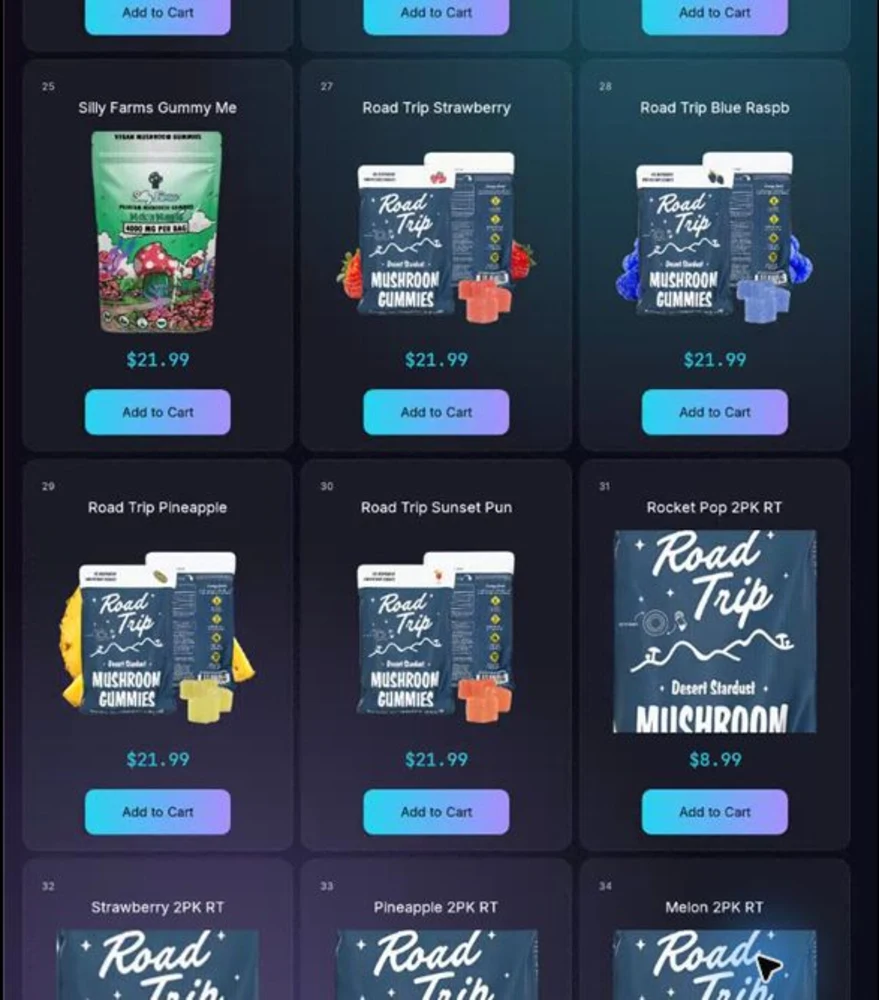
The storefront should show current products and availability clearly, then guide the customer through the configured eligibility, payment, and collection sequence. Support information must be visible when a customer has a question or a delivery fails.
AgeVend.com publishes a real connected-machine screen capture so buyers can inspect the product grid, pricing, cart, loyalty, support, and lab-results entry points before requesting a quote.
Operate from exceptions, not vanity charts
Daily route attention usually starts with low stock, offline machines, delivery faults, disputed transactions, and customer issues. The dashboard should help an operator decide what to do next, not merely display cumulative revenue.
Review machine status, inventory, orders, tax, customers, faults, campaigns, tickets, and team permissions in the public AgeVend operator demo.
Model the economics conservatively
Use the delivered machine cost, inventory, product margin, processing, verification, taxes, venue share, route labor, support, downtime, shrink, and financing. Compare several ticket and transaction scenarios rather than relying on a single payback claim.
The AV-1 currently starts at $9,500 before deployment-specific costs. Request a written quote that separates hardware, logistics, software, transactions, and operating inputs.
Questions buyers ask
How much is a vape vending machine from AgeVend?
The AV-1 current base price starts at $9,500. Freight, taxes, software, processing, verification, inventory, and other costs are confirmed separately.
How many products can the machine hold?
Connected AgeVend machines currently report 60 configured slot positions. Usable capacity depends on product dimensions and planogram.
Can I see the actual screen?
Yes. AgeVend.com displays a real screen captured from a connected machine.
Does AgeVend decide which vape products are legal?
No. The operator must confirm product eligibility, licenses, placement, payment, and other requirements.
Does age verification make a vape-vending placement legal?
No. A configured age-verification flow does not by itself make a vape-vending placement lawful. The operator must confirm the actual product, location, access conditions, licenses, payment approval, and current rules.
Ready to evaluate the AV-1?
Start with the published $9,500 base price, a real connected-machine screen, the read-only operator demo, and a written route quote covering the complete deployment.