
Updated August 2, 2026. This commercial planning guide is not legal, tax, payment, or financing advice. Requirements vary by product, location, program, and jurisdiction.
Published transaction economics: ID + face verification is $1.00 per attempted verification. Fingerprint verification is $0.50 per successful match, with no fee on failed fingerprint scans. Card processing is provided by Lifted Payments at 3.99%; a separate payments application and approval are required before go-live.
See the complete operation.
Inspect every demo page, then request delivery scope and financing options for your route.
Confirm whether vending is allowed at the location
Tobacco and nicotine rules can differ by federal, state, and local jurisdiction, and may distinguish between adult-only venues, supervised spaces, and locations accessible to minors. Product category, placement, hours, signage, and license holder can all matter.
Before signing for hardware, identify the specific address, the entity that will operate the machine, the products being considered, and the authority responsible for each license or restriction. General internet advice is not a substitute for current location-specific review.
Map the verification and purchase sequence
Document when the customer encounters the age check, what information is evaluated, how an unsuccessful check is handled, and whether the system prevents payment or delivery when the configured requirements are not met. The transaction record should be understandable to both operations and support.
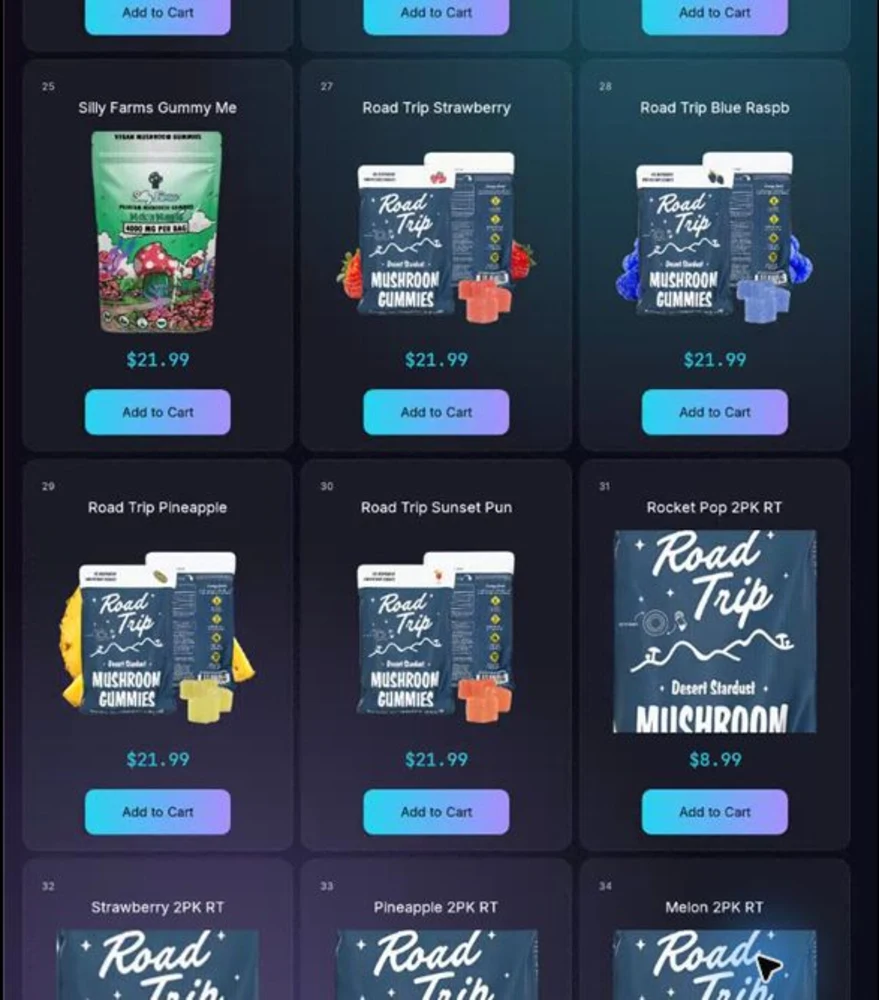
The AgeVend kiosk experience shows the real customer storefront and the handoff from browse to the configured eligibility and checkout flow.
Design the planogram for regulated products
Package dimensions, merchandising rules, product rotation, tax treatment, and demand vary across cigarettes, cigars, pouches, vape products, and accessories. A 60-position cabinet does not mean every mix uses all positions equally.
Build the first planogram with product dimensions, unit cost, selling price, expected turn, reorder point, and shelf assignment. Keep reserve inventory and returns separate from the machine count so the dashboard reflects what is actually available to customers.
Treat payment acceptance as a separate review
A machine can be technically capable of accepting a card while a processor, sponsor, or program applies category-specific requirements. Confirm accepted product types, merchant classification, underwriting, terminal configuration, processing rates, reserves, chargeback handling, and settlement timing in writing.
Never assume that hardware availability equals payment approval. The processor and operator agreement should match the intended products and locations.
Build an auditable operating routine
Set a cadence for inventory reconciliation, tax review, machine health, customer issues, verification exceptions, access changes, and service tickets. Separate the people who can view financial reports from those who can change machines or products when the route grows.
The AgeVend operator platform exposes machines, products, inventory, orders, customers, tax, faults, campaigns, support, and team surfaces. Inspect the read-only demo before purchase.
Prepare for inspection and change
Keep license records, placement approvals, product documentation, signage requirements, vendor agreements, processing terms, service records, and training material organized by location. Rules and product eligibility can change after installation.
Questions buyers ask
Are tobacco vending machines legal everywhere?
No. Requirements and restrictions vary by jurisdiction, product, and location. Confirm current rules before purchase or placement.
Does an ID scanner make any location compliant?
No. Verification is one control. Placement, supervision, licensing, signage, products, and other requirements may also apply.
Can AgeVend show product and machine inventory?
The operator platform includes product, inventory, machine, order, and fault surfaces. The public demo uses synthetic data.
What does the AV-1 cost?
The current base machine price starts at $9,500, with final deployment costs confirmed by written quote.
Ready to evaluate the AV-1?
Start with the published $9,500 base price, a real connected-machine screen, the read-only operator demo, and a written route quote covering the complete deployment.